If Ye Break Faith

This blog is dedicated to the promotion of educating about the Canadian experience of World War One. To discover who we are as a nation in the 21st Century, we must understand our past.


Monday, 15 August 2016

Assault on Trench 38

German troops make an attempt on Canadian lines, Ypres August 1916

“The conduct of the 60th Battalion holding trenches
38-46 was all that could be desired”

-Lt Colonel Gascoigne, O.C.
60th (Victoria Rifles of Canada) Battalion[1]


Warm days and cool nights, common to the Low Countries in mid-August combined to create a series of misty mornings.  Big guns behind the trench lines barked and growled at irregular intervals, harassing and probing for weakness; destroying by day the trenches, outposts and wire obstacles both sides worked nightly to repair.  It was a tiresome cycle of building and demolition which by now had become routine.  The underground war of mines, countermines and dangerous collapses brought on by unstable, saturated earth continued, and nightly small groups of men crept forward in attempts to fulfill the desire for accurate and current intelligence.

Nothing at all on the morning of the twelfth could, with all of this going on, be considered unusual, as that term was hardly of use to describe anything in the Ypres Salient in the depths of summer 1916.

The Canadian Corps was decamping from the Salient, moving in stages to areas rearward in preparation for redeploying at the Somme.  It had to be done in such a measured way so that no portion of the line was weakened, and due to the vast number of men and amount of materiel involved.  With the inclusion of the 4th Canadian Division, now in the process of shipping to France, the Corps would soon be complete “with a strength of nearly 100 thousand men.”[2]  To avoid any difficulties- logistically or tactically- each active division would be pulled from the line one brigade at a time.  This was begun by the 1st Canadian Division shifting the 1st, 2nd and 3rd Canadian Infantry Brigades in turn to “the Second Army Training Area west of ST. OMER, where (the Division) will come into Army Reserve.”[3]  

The portion of the Salient which had been held by 1st Division would be taken over by extending the frontage covered by 3rd Division.  By putting all three of its brigades (7th, 8th and 9th Canadian Infantry Brigades) forward when two was more usual and having these brigades organised so each would have “two battalions in line, one in Brigade Reserve and one in Divisional Reserve,”[4] 3rd Division could maintain the density of front line occupation.  A trade off in doing so, however, was in having less units available in immediate reserve.  This might make reinforcement or counterattacking any German offensive more difficult.  If this was a concern, no note was made of it.  After all, despite all the background noise, Ypres was still a “quiet” sector, and 3rd Division would only be this extended for ten days before withdrawing its brigades in place of a British Division due to arrive on the week of the 25th.
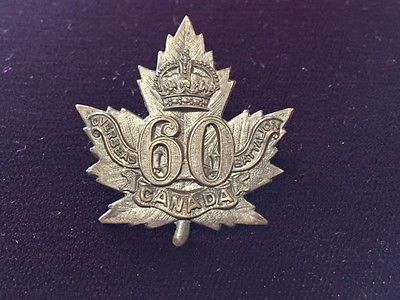
Transfer out of 1st Division was completed when the 60th Battalion (9th Brigade, 3rd Division) fresh from a rest position took over front line trenches from the 1th Battalion (2nd Brigade, 1st Division) overnight, 11-12 August.  A highlight of the recent stay out of the line for the 60th- the Victoria Rifles of Canada from Montreal- must have been at last having their turn in the Corps-wide exchange of the Short Magazine Lee Enfield in place of the notoriously poor-performing Ross Rifle.  They might not have thought they’d get much of a chance to make use of them this time up the line.  Had any man had thought that; he would have been wrong.

Just as the morning moved towards nine o’clock, the Germans opened up a terrific artillery bombardment, concentrating their fire on the front line trenches which the Vic Rifles had only just taken over, and those adjacent to their right held by 1st Canadian Mounted Rifles of 9th Brigade.  The onslaught was fierce an accurate, plowing through their wire and blowing portions of the parapet down. The prospect of getting clipped by a shell splinter was just as fearsome as becoming entombed in the sliding wreck of the very thing built to protect them from shelling.  Canadian batteries were alerted and began their own counter-bombardment.  Such an intensity of fire could only mean one thing- that the enemy was planning to come over, in strength.

When, a little more than an hour after it began the German shelling checked pace, a push by their infantry was almost certain.  Exactly where they would hit, and in what strength remained to be seen.  Ground between opposing lines was uneven, undulating and shattered; a combination of rolling topography and explosive cosmetic changes.  This tirade of shelling had whisked the loose, dry surface dirt into a filthy clouded screen.  Observing enemy movement would be difficult, if not impossible, until their troops were directly on top of Canadian lines.

At close to ten o’clock, the first German probes hit-hard; leading their attempts with showers of grenades.

The main body of German infantry, estimated to be between 150-200 strong were pushing forward in two waves, their apparent objective to gain lodgement at a point of the Canadian defensive system labelled “Trench 38.”  It was evident the Germans knew exactly what they were doing.  They had chosen to attack the place which not only marked a boundary between battalions- the 60th Bn. and 1st CMR- but Trench 38 also denoted the right and left edges of 9th and 8th Brigades’ area of responsibility. A rapid thrust at this precise point would send shock waves and quite possibly situational confusion through several chains of command.  The Germans also seemed to have timed the attack to coincide with units fresh to the front- 1st CMR had only arrived the day before from a reserve position, the Vic Rifles had been in place less than twelve hours, and both had taken over trenches in an area they were not immediately familiar with, it had belonged to 1st Division just a few days ago.

When the assault was made, 1st CMR joined in with the Vic Rifles- “the enemy was seen to advance….Front parapet was immediately manned and vigorous fire from rifle and machine guns was brought to bear, checking the advance and causing many casualties.”[5]  Both battalions’ fire forced the greater part of the German assaulting troops back to their own lines-those that were capable of doing so.  Trenches held by the Vic Rifles were only breached in two places, by barely a handful of German troops.  In both cases, the attempt to gain lodgement was foiled by quick thinking Sergeants using grenades and one enthusiastic private who “jumped over the parapet and bayonetted one of the raiders.”[6]  This deft act, worthy of note in Colonel Gascoigne’s report, would in fact cost Pte Cann his life.  He’d been overseas less than two months.[7]

Using the dead ground to their advantage, a small number of Germans were able to get as far as the outposts the battalion had set up in the craters immediately in front of the firing line.  The Canadians here were killed to a man, but the enemy couldn’t hold this ground for long, coming under direct rifle and machine gun fire “with good effect, as only a few of them were seen to crawl back into German lines.”[8]

Exactly what the Germans had intended that morning was unclear.  Aside from smaller bombing parties making demonstrations elsewhere, and believed to be feints, the action was confined to this specific portion of the Canadian line.  If it had been a raid, it was unusually large, at an unusual time of day and presaged by an hour’s bombardment which was out of character for these regularly swift and surprising attacks of opportunity.  Observation of German trenches had generated reports of high concentrations of troops- possibly reserves- in full packs and equipment.  Later consensus by Canadian intelligence was that the Germans had mounted a raid in strength with the intention of following through by deploying their reserves in force should the raiding party gain possession of the Canadian front line.

It was, all considered, a fairly minor action, developing and concluding between breakfast and lunch on the morning of the twelfth.  Both 1st CMR and the Vic Rifles were able to report the situation as stable before one in the afternoon.  Total casualties between the two battalions were 32 Killed, 93 wounded and 3 missing.[9]  What was shown in this brief, intense skirmish, however, was that the Canadians certainly weren’t the soft target their critics- both friend and foe- may have thought judging by the worrisome loss of ground in June.  The Corps had learned from error and lack of preparation, incorporating these lessons in the ongoing training of both officers and men.  This would be to their credit in the months and years ahead, particularly in such a war with a constantly increasing learning curve.[i]


It is with extreme pleasure that I can announce that my first full length work of fiction,


 is now available for sale through Kindle Direct Publishing:

Moments before the men of Six Platoon 'B' Company, King's Own Canadian Scots Regiment will go forward to assault Vimy Ridge, each one of them must reconcile themselves to their probable fate. Felix Strachan, a teen-aged corporal about to lead his men into battle, has already seen a lot of this war; its arbitrary cruelty to life. In the past eight months he's been fighting in France, he's lost friends and a little of his faith in mankind, though nothing has bothered him more than the death of a stranger- a transferred officer left on the field after a failed patrol. Not only can no one seem to remember who the officer was, his death may not have been at the enemy's hands. Felix, in the seconds before Zero hour tries to come to terms with a question he has held for as long as he can remember- "What does it mean to die well?"

This book uses the extreme human experience of war to explore ideas of morality within a historically correct, visceral and realistic narrative.  I have, in order to achieve this, relied upon my strength as an essayist and lecturer on the history of the First World War, as well as my own service with the Canadian Army.


[1] Gascoigne, F.A., Lt Col. Report Dated 12 August 1916 from 60th Bn to 9th Bde
[2] Marteinson, John, “We Stand On Guard: An Illustrated History of the Canadian Army” Ovale Publications 1992 pg. 139
[3] Operations Order 93, 1st Canadian Division 08 August 1916
[4] Summary of Operations, Canadian Corps, 11-17 August 1916
[5] War Diary Entry, 1st Canadian Mounted Rifles, 12 August 1916
[6] Gascoigne, F.A., Lt Col. Report, ibid.
[7] M.F.W. 54: “Casualty Form, Active Service” per No. 139543, Cann J A Pte.
[8] Gascoigne, F.A., Lt Col. Report, ibid.
[9] War Diary Entry, 1st Canadian Mounted Rifles, 12 August 1916 & Gascoigne, F.A., Lt Col. Report, ibid.


[i] All Primary Sources Cited, and Information Used to Construct this Article is due to the courtesy of Library and Archives Canada.

Monday, 8 August 2016

Battered and Death-Accursed World


Preparing for a renewed offensive, Ypres August, 1916


“all ranks agreed in the hope that they would never
again hold a trench in the pounded, battered and death-accursed
world between the Hun and the stricken, dead City of Ypres”[1]
-Kim Beattie “The 48th Highlanders of Canada”

"Fire Swept Algoma" by Frank Johnston 

A consistently heavy, drowsy heat became the daily expectation for the first week of August, 1916 along the Ypres Salient.  The war had just gone into its second year and the lines which had solidified by that first autumn had remained more or less intact and immovable since.  In early July, the Canadian Corps had issued warning orders to the effect that all necessary preparations be made for a renewed assault in the Mount Sorrel area to recapture and consolidate positions still in German hands.  These preparations were to be complete by no later than 31 July, the operation itself to begin at a time and date to be specified later[2].


The bulk of this preliminary work was a sequence of shifts along the Canadian held portion of the line.  Moving the three divisions in sequence would put all of them in the best possible starting positions for the assault.  A critical aspect would be to form a definitive understanding of the enemy.  Information as to the nature and complexity of his trenches, heavy weapons emplacements, wire obstacles and even unit identification were all valuable intelligence to ensure a well-developed plan of attack.  The Corps’ directive to its divisions, and they to their brigades was that aggressive and constant raids and patrols were expected to gain this vital information.  3rd Canadian Infantry Brigade, holding 1st Canadian Division’s front line positions in the first week of August issued a directive to its component battalions (13th, 14th, 15th and 16th) which was explicit on the subject: “Identifications- dead or alive, are required by the Division at all costs.  You will send out offensive patrols each night and all night, in order to effect this purpose.”[3]  Brigadier general Tuxford, G.O.C. 3rd Brigade minced no words to convey the point that these patrols were not merely reconnoitering in purpose, they were to be fighting patrols.  “Any hostile patrol that is seen,” his memorandum continued, “is to be engaged and followed up….Enemy listening posts will be destroyed, and an endeavour made to secure the occupants.”[4]

The night before General Tuxford issued these orders, on the 3rd of August, Major Davis’ 3rd Tunnelling Company had used a combined total of 3,600 pounds of ammonal in two charges as a countermine.[5]  Having detected another German effort underground, the Canadian tunnellers had once again acted pre-emptively and the explosion collapsed the German gallery, and was powerful enough to form a crater on the surface.  It had been hoped that this “bump” might breach the German front line, and a consolidation party from the 16th (Canadian Scottish) Battalion rushed to the crater.  Opposing lines were very close together at this juncture, and Major Davis’ work had done “more damage to our front line than expected, in the way of pushing the parapet over and filling the trenches with debris.”[6]  Some casualties were caused by this collateral damage, but most of the 16th’s losses (two killed, twenty-seven wounded) were due to the swift German retaliation.  The enemy front line had not been hit by the mine as expected, and the Germans were able to keep up a steady fire of rifles, machine guns and trench mortars which discouraged the Can Scots from entering the trench.

The following night, in a direct response to General Tuxford’s directive, a patrol from the 14th (Royal Montreal Regiment) Battalion went out in search of the enemy.  Having been put on the alert from the mine the night before, the Germans were wary of any follow-up; which the Montrealers found out first hand:

Patrol of 1 Sergt. And 3 men of the 14th Bn. went out…and entered a shell crater….There was an entrance to an underground sap…which led to German trench.  When patrol entered hole none of the enemy were seen, but board was pushed away and simultaneously a light was fired from trench landing close to patrol, and throwing them into relief.  Two Germans then came out of the sap and attempted to bayonet the Sergt. and one man who were in the hole, but both were shot point-blank with revolvers-one actually lunging over the Sergt’s. shoulder and running into his revolver.  A third man was shot through the back by another of patrol….Groans were heard but more Germans came out of sap and started throwing bombs in all directions, while bombs were being thrown and rifle and M.G. fire kept up from enemy trench.[7]

Outnumbered- they estimated there were a dozen Germans in the sap they had discovered- and outgunned the four men beat it back to their own lines without losing a man, but likewise not gaining any enemy identification.


Activity, of the mine blown on the third and the failed patrol on the fourth had done plenty to really set the Germans on edge.  This was the situation facing Lt. Colonel Bent’s 15th (48th Highlanders) Battalion on the night of the fifth.  Colonel Bent had been ordered by General Tuxford to raid enemy trenches opposite his battalion’s positions, in keeping with the earlier, aggressive memorandum.[8]  Set to go ahead at eleven that evening, trench mortars would be employed to cut the German wire and destroy a known machine gun position.  The mortars would then shift their fire to portions of the German front line adjacent to the raid’s objective, isolating the area for the duration of the operation.  Colonel Bent’s preparations included detailing men to provide cover to the raiders, men to hold the point of entry and those who would actually gain a foothold in the enemy trench.  These men, a veritable gang of thugs were to be armed with an assortment of weapons- bombs, bayonets, pistols and a type of club called a knobkerrie- and would commit as much violent mayhem as they could while searching for the desired information, it not mattering much if the source was still living or not.  To ensure they gave nothing of themselves away, “All ranks must be divested of all identities, before leaving.”[9] No one was to carry any letters or papers, and all identifying badges or patches would be removed from uniforms.
 
It was all rather anticlimactic, as Colonel Bent would later report.  Patrols sent to assess the damage done to the wire by the trench mortars “found the wire practically untouched, and as the T.M. fire put the enemy very much on the alert, it was impossible to cut the wire by hand, and the original plan had to be abandoned.”[10]  A subsequent patrol, sent to capture a listening post was also held up by strong wire entanglements and resulted in a bomb throwing match- around fifty to each side- before returning, also without any credible intelligence. 

For the other divisions, it was much the same, there being only one prisoner taken along the entire Corps’ frontage from 3-10 August.  A bombing post of the 43rd Battalion was attacked on the third, but the Germans were scattered back by the quick actions of the post’s commander, Lieutenant J. G. Young. Afterward, a wounded German was taken back to Canadian lines and found to be a Brandenburger from the 359th Regiment, 4th Ersatz Division.[11] Now, at least in a very small way, the Canadians knew who they were facing.  They also knew that the enemy was putting a great amount of work into his defenses, concrete and fresh timber had been reported as being seen in German lines.  The wire that had scuppered the Highlanders also indicated that the Germans were ready to make a great effort to repulse any attack upon their positions.  All indications were that the coming fight would be as hard as any the Corps had yet seen.

This was, however, to become someone else’s problem.  The attack, what all the previous weeks had gone towards, in effort and blood, would not take place.  Events further south required a relatively fresh Corps to relieve another which had been heavily embattled.  The Canadians were going to the Somme.[i]


It is with extreme pleasure that I can announce that my first full length work of fiction,


 is now available for sale through Kindle Direct Publishing:


Moments before the men of Six Platoon 'B' Company, King's Own Canadian Scots Regiment will go forward to assault Vimy Ridge, each one of them must reconcile themselves to their probable fate. Felix Strachan, a teen-aged corporal about to lead his men into battle, has already seen a lot of this war; its arbitrary cruelty to life. In the past eight months he's been fighting in France, he's lost friends and a little of his faith in mankind, though nothing has bothered him more than the death of a stranger- a transferred officer left on the field after a failed patrol. Not only can no one seem to remember who the officer was, his death may not have been at the enemy's hands. Felix, in the seconds before Zero hour tries to come to terms with a question he has held for as long as he can remember- "What does it mean to die well?"


This book uses the extreme human experience of war to explore ideas of morality within a historically correct, visceral and realistic narrative.  I have, in order to achieve this, relied upon my strength as an essayist and lecturer on the history of the First World War, as well as my own service with the Canadian Army.


[1] Beattie, Kim, “48th Highlanders of Canada: 1891-1928” 1932, pg. 156
[2] Canadian Corps Operations Order No. 24 30 June 1916
[3] War Diary Appendix 16, 3rd Canadian Infantry Brigade, August 1916
[4] War Diary Appendix 16, ibid.
[5] War Diary Entry, 3rd Canadian Tunnelling Company, 3 August 1916
[6] Leckie, J.G., Lt-Col. “Preliminary Report on Operations Night of 3rd-4th August 1916” 16th Battalion to 3rd Canadian Infantry Brigade
[7] Intelligence Summary 3rd Canadian Infantry Brigade, 4 August 1916
[8] 3rd Canadian Infantry Brigade Operations Order No. 88 5 August  1916
[9] 15th Battalion (48th Highlanders) Raid Orders 5 August 1916
[10] Bent C.E. Lt-Col, “Report on Operations 5 August” from 15th Battalion to 3rd Canadian Infantry Brigade
[11] War Diary Entry, 43rd Battalion, 3 August 1916


[i] All Primary Sources Cited, and Information Used to Construct this Article is due to the courtesy of Library and Archives Canada.

Monday, 1 August 2016

Hard Won Ground


Vigilance Prevents Disaster at the Ypres Salient, July 1916

“I beg to report on the situation caused by the enemy
exploding a mine in the ‘Bluff Sector’ on the night of the 25th inst.”
-Lt. Col Gardner, O.C. 7th Bn.
Report to 2nd Canadian Infantry Brigade
26 July 1916
"The Ypres Salient at Night" by Paul Nash (wikimedia commons)

At about four o’clock in the afternoon on the 25th of July 1916, headquarters of 2nd Canadian Infantry Brigade received information which the entire Canadian Corps had been told to anticipate.  The No. 1 Listening Post of No. 3 Tunnelling Company had picked up definite sounds of enemy activity.  Underground listening posts had been tracking the German miners, and it was firmly believed that a mine was being prepared for detonation.  Earlier that month Major Davis, O.C. No. 3 T Coy had ordered a pre-emptive strike- a camouflet- to collapse a known enemy gallery opposite his No. 6 LP.  “This was apparently very successful, smoke being seen rising from the enemy’s lines for some time after the explosion occurred.”[1]

A charge of 1,000 pounds of the high explosive called ammonal seemed to put this German mining effort at bay, at least for the time being.  It appears that Major Davis’ initiative had prevented a potential disaster; but it wasn’t as if he and his miners were the only ones prepared in the eventuality of enemy success underground.  His reports were treated with the utmost gravity; both the artillery and infantry had been cautioned as to what may happen, and what to do in such a case.  It was plain that nobody, at any level of the Canadian Corps wished to have repeated the catastrophe which had opened the Battle of Mount Sorrel the month before.

On the 2nd of June “(a) mine exploded on the battalion front at about 1 p.m. and an order came down the line to withdraw.”[2]  The 4th Canadian Mounted Rifles had been caught in what was later determined to have been a concurrent detonation of four mines.[3]  “At this time the whole front line was flattened out and there were no trenches of any description, and very few of the battalion were able to carry on.”[4]  Destruction caused by the mines and the lack of any counter-preparedness on the Canadian side made the following advance of German infantry a near walk-over.  It had cost the Corps quite dearly in ground lost and men who’d simply vanished.  “During the afternoon and evening of the 2nd, about 45 men reported to Brigade HQ from the front and support lines.”[5]
 
Competency of the Canadian Corps began to be under question from such a defeat.  Moreover, any further successes for the Germans here could find the vital hub of Ypres in enemy hands and the entire Western Front in serious jeopardy.  There could be no repeat of the same type of complacency surrounding the June 2nd explosion.  It was up to Major Angus Ward Davis and his Tunnelling Company to be vigilant enough to be able to provide ample warning of a repeat attempt, and those above ground at all levels of command to be prepared to take swift action in the event.  Having blown the camouflet on the 17th seemed to discourage the Germans, but it was only a week before Major Davis was alerted again to a possible mine.

This was the nature of the report he’d sent to 1st Canadian Division HQ on the 25th, who then subsequently alerted the Brigades under its command.  If the enemy were determined to blow a mine on the 25th, they had picked the right day for it.  2nd Brigade was due to be relieved by 1st Brigade all along the Division front that evening and the Germans had the chance of creating twice the amount of casualties if their timing matched that of the change-over.

Immediately upon receiving intelligence of the German mine, Brigadier General Loomis, G.O.C. 2nd Brigade put contingency planning, all worked out beforehand, in place.  Within an hour of the warning, he’d ordered Lt Colonel Gardner, whose 7th Battalion was directly above the suspected mine “to reduce the garrison in these portions of the front so that the localities would only be held by posts; and to organise bodies of troops immediately in rear and on the flanks with which to make the counterattack.”[6]  Col Gardner complied, re-distributing his battalion in order to minimise the effect of any explosion and detailed a company, split into different holding positions augmented with bombers, light and medium machine guns under Captain William Archer Casey as the counterattack force, thinning out his front line trenches and outposts, keeping relief forces on hand in the support lines.

Captain Casey seemed the right choice for the job of leading the counterattack.  He’d risen through the ranks quite rapidly, a mark of an astute and indispensable man.  Part of the First Contingent of volunteers in the autumn of 1914, he’d made Sergeant at Valcartier, gaining his commission to Lieutenant while convalescing from shrapnel wounds received in 1915.  He’d become a Captain in February, and was shortly due to be promoted again to Major.  Col Gardner reported to Brigade Headquarters by seven that evening that his battalion was set.  The relief was to go ahead as planned, and all battalions, incoming and outgoing had been informed and made ready to act accordingly.  Rallying points had been set up behind the lines and units moving up to the front would hold in those places until the situation was in hand.

Nothing, though, seemed to be happening which was out of the ordinary.  As the sun set, the usual stream of fire- sniping and bursts of machine guns- was reported up and down the line, though this was minimal.  Oddly enough, there was no shelling by German artillery, which General Loomis mad a note of in his after-action report: “At 9.50 p.m….the night seemed to be an exceptionally quiet one on the front of the 1st Canadian Division.”[7]  He was confident the relief now underway would be completed by midnight.

Five minutes after his observation on how quiet it seemed, General Loomis’ Headquarters was rocked by “an earthquake.”  Colonel Gardner, near the epicentre, immediately sent up an S.O.S. flare to signal the artillery.  Within thirty seconds, three batteries, the 18th, 20th and 23rd of the Canadian Field Artillery combined as “Dodds Group” opened up their pre-arranged salvo of high explosive and shrapnel on the German forward lines.  Col Gardner remained at his headquarters to receive and pass upward the initial reports from his forward area, then he proceeded to the scene to gain his own appreciation of the situation.

Much of his front line trenches “had been obliterated and filled in”, making them impassable.  Captain Casey’s men had already rushed forward, over this destroyed ground and were setting up a strong position in the brand new crater, which was a pretty fair size.  “The crater formed was, approximately, 300 feet by 150 feet and from 25 to 40 feet deep.”[8][i]  Colonel Gardner came as far ahead to the forward most positions his men had established in “New Crater”, and was satisfied that the situation was under control.  Machine gun and rifle fire was complimenting the artillery bombardment, pasting the German trenches so fiercely that the enemy could make no attempt to get beyond their own parapet.  Other men of the counterattack were watching the canal to their right for any encroachment or were working quickly with shovels and sandbags to solidify and consolidate this new position.

The entire affair was over within an hour and a half.  German troops had been stopped cold by the counterattack and the fire from Dobbs Group, which had dropped a total of 194 4.5” high explosive and 536 18pdr shrapnel shells on the enemy’s works.  A scheme to take the Canadians by shock had been an effort wasted, in no small part by Major Davis’ work underground and Captain Casey’s swift action above.  By 11.35 that evening, the situation had stabilised and the 7th Battalion was relieved at the front by the 4th Battalion, having lost 6 men killed, 25 wounded and 17 missing.  It was a triumph of proper preparation and coordination between arms, such as would become a hallmark of the Canadian Corps, which prevented what could have been a calamity.
 
Captain Casey, with a few other officers and men was singled out by Colonel Gardner and General Loomis for praise for the “prompt and efficient manner” in how the situation was handled.  His Majority was well deserved if not shortly held.  Major William Archer Casey was killed in action just two months later, at the Somme, once again during a fight to keep hard won ground.


* * * * *

It is with extreme pleasure that I can announce that my first full length work of fiction,
 is now available for sale through Kindle Direct Publishing:

Moments before the men of Six Platoon 'B' Company, King's Own Canadian Scots Regiment will go forward to assault Vimy Ridge, each one of them must reconcile themselves to their probable fate. Felix Strachan, a teen-aged corporal about to lead his men into battle, has already seen a lot of this war; its arbitrary cruelty to life. In the past eight months he's been fighting in France, he's lost friends and a little of his faith in mankind, though nothing has bothered him more than the death of a stranger- a transferred officer left on the field after a failed patrol. Not only can no one seem to remember who the officer was, his death may not have been at the enemy's hands. Felix, in the seconds before Zero hour tries to come to terms with a question he has held for as long as he can remember- "What does it mean to die well?"

This book uses the extreme human experience of war to explore ideas of morality within a historically correct, visceral and realistic narrative.  I have, in order to achieve this, relied upon my strength as an essayist and lecturer on the history of the First World War, as well as my own service with the Canadian Army.


[1] 1st Canadian Division Intelligence Summary 91, July 1916
[2]War Diary Entry, 4th Canadian Mounted Rifles, 2nd June 1916
[3] Cook, Tim, “At The Sharp End: Canadians Fighting the Great War 1914-1916”, Penguin Canada, 2009 pg. 351
[4] War Diary Entry, 4th Canadian Mounted Rifles, ibid.
[5] War Diary Entry, 4th Canadian Mounted Rifles, ibid.
[6] BGen Loomis, Report of Operations 25-26 July 1916 to 1st Canadian Division from 2nd Canadian Infantry Brigade, , 28th July 1916
[7] BGen Loomis, Report of Operations 25-26 July 1916, ibid.
[8] War Diary Entry, Canadian Corps General Staff, 25 July 1916


[i] All Primary Sources Cited, and Information Used to Construct this Article is due to the courtesy of Library and Archives Canada.